Discover the best techniques and materials for grouting patio slabs in the UK. Learn how professional grouting enhances the durability and appearance of your outdoor space.
Overview
When it comes to building a patio that not only looks good but also lasts for years, grouting is one of the most critical steps. While it might seem like a finishing touch, grouting patio slabs plays a crucial role in preventing weed growth, protecting the structural integrity, and enhancing the overall appearance of your outdoor space.
In this detailed guide, we’ll explain everything you need to know about grouting patio slabs, from the materials and techniques to expert tips and the benefits of hiring a professional service like ours.
What is Grouting for Patio Slabs?
Grouting refers to filling the joints between patio slabs (also called paving stones) with a suitable material to secure them in place and seal the gaps. This process helps bind the slabs together, prevents moisture from seeping underneath, and protects against weeds and shifting.
Why is Grouting Patio Slabs So Important?
- Prevents weed growth in between the slabs
- Keeps slabs stable and evenly spaced
- It improves water drainage and reduces puddling
- Enhances the visual appeal of the patio
- Protects against frost damage and erosion
Without proper grouting, even a beautifully laid patio can start to deteriorate within months.

Types of Grout for Patio Slabs
Choosing the right grout is vital for the longevity and performance of your patio. In the UK, where weather conditions can be unpredictable, selecting a grout that can withstand rain, frost, and temperature changes is essential.
1. Cement-Based Grout
This traditional option involves mixing sand and cement, applied manually using a trowel or brush. It’s cost-effective but can be prone to cracking if not sealed properly.
Pros:
- Affordable
- Readily available
- Strong bond when cured
Cons:
- Time-consuming to apply
- Susceptible to cracking and moss growth if not sealed
2. Resin-Based Grout (Jointing Compound)
Modern resin-based jointing compounds are designed for ease of use and long-term durability. These grouts are ready-mixed and swept into the joints, making them ideal for DIYers and professionals alike.
Pros:
- Fast and easy application
- Water-permeable, preventing puddles
- Resistant to weed growth and cracking
Cons:
- More expensive than cement-based options
- Not ideal for very narrow joints
3. Polymeric Sand
Though more commonly used in North America, polymeric sand is catching on in the UK. It hardens when wet, creating a durable and flexible finish.
Step-by-Step: How We Professionally Grout Patio Slabs
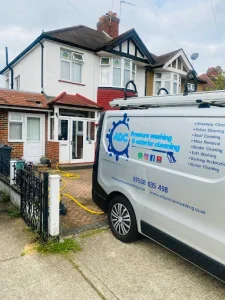
As experienced exterior cleaning and maintenance specialists, we follow a precise method to ensure a clean and effective grout finish. Here’s how our team at ADC Pressure Washing handles the job:
1: Clean the Area Thoroughly
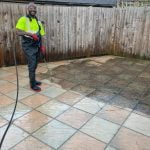
We start by pressure washing the patio to remove dirt, moss, and debris. Clean joints are essential for proper grout adhesion.
2: Remove Old Grout (if Re-grouting)
If you’re refreshing an older patio, we carefully rake out the old grout using specialised tools without damaging the slabs.
3: Choose the Right Grout Material
Based on your patio style, slab type, and joint width, we recommend and apply the most suitable grout – usually a high-quality resin-based compound.
4: Apply the Grout
For resin grout, we sweep it into the joints using a squeegee or brush, ensuring every gap is filled. For cement-based mixes, we use pointing trowels.
5: Compact and Smooth
We compact the grout into the joints and smooth it over for a professional finish. This also helps prevent water ingress and dislodgement.
6: Final Cleaning and Sealing
Once the grout has cured, we rinse the surface and optionally apply a patio sealant to enhance longevity.
Common Grouting Mistakes to Avoid
If you’re planning to grout patio slabs yourself, here are a few common mistakes to watch out for:
- Using the wrong grout type for your patio
- Not cleaning the joints properly beforehand
- Applying grout in poor weather (especially if rain is forecast)
- Failing to compact grout into the joints
- Skipping the sealing step, leaving grout exposed to the elements
Professional services like ours eliminate these risks by using tried-and-tested techniques and materials suited for UK conditions.

How Long Does Grouting Patio Slabs Last?
With the right product and installation, grouting patio slabs can last between 5–10 years or longer. Resin-based compounds typically outlast cement-based options, especially when paired with a protective sealant.
Factors that affect grout longevity include:
- Weather exposure
- Type of grout used
- Patio usage (foot traffic, furniture, etc.)
- Drainage and maintenance
We always recommend periodic cleaning and inspections to keep your patio in top shape.
Benefits of Hiring a Professional Grouting Service
While DIY grouting is possible, it’s often time-consuming and easy to get wrong. Our expert team ensures:
- Correct grout selection for your patio
- Fast, clean application
- No mess left behind
- Even joints and consistent finish
- Optional sealing for added protection
Grouting patio slabs isn’t just about filling the gaps—it’s about preserving the beauty and functionality of your outdoor space. By trusting professionals, you save time, avoid costly mistakes, and get long-lasting results.
Why Choose ADC Pressure Washing for Grouting Patio Slabs?
At ADC Pressure Washing, we don’t just clean patios—we restore and protect them. Based in New Malden, Surrey, we proudly serve clients throughout London and the surrounding areas with tailored patio maintenance solutions.
- Fully insured and licensed
- Experienced with all patio types: Indian sandstone, concrete, granite, and more
- Premium materials and eco-conscious products
- Local, friendly, and professional service
Whether you’re installing a new patio or re-grouting old slabs, we offer reliable, high-quality artistry every time.
Maintenance Tips After Grouting Patio Slabs
After grouting, take these simple steps to extend the life of your patio:
- Avoid walking on the surface for 24–48 hours
- Clean spills quickly to prevent staining
- Rinse your patio monthly with a garden hose or light pressure wash
- Inspect grout lines seasonally for cracks or wear
- Re-seal every 2–3 years, especially in high-traffic areas
Regular maintenance means fewer repairs and a consistently great-looking patio.
Final Thoughts
Grouting patio slabs is more than just a finishing task—it’s a critical element that defines how well your patio performs and how long it lasts. Whether you’re updating an existing patio or finishing off a brand-new one, proper grouting ensures your outdoor space remains attractive, durable, and safe.
Ready to transform your patio?
Contact ADC Pressure Washing today for expert grouting services tailored to UK homes and weather conditions.